

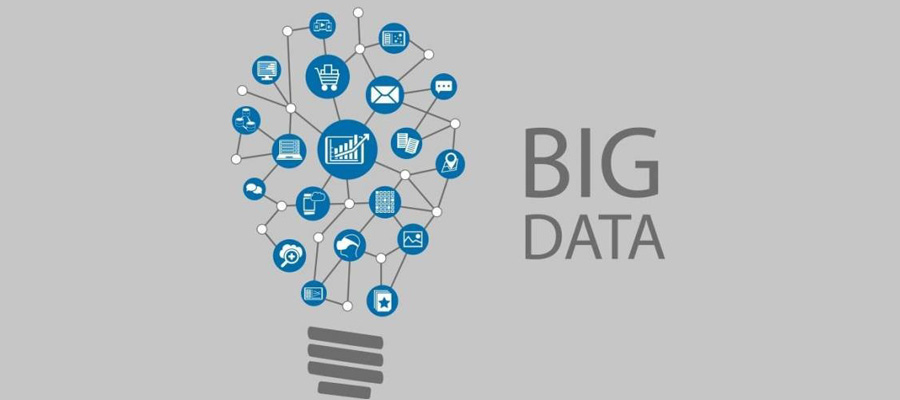
BIG DATA... KEY TRENDS
Before IT revolution came in, storing and managing the raw data coming out of any business was a huge challenge and use to involve lots of manpower and money. But now with implementation of big data and cloud computing, data gathering, data processing, data analyzing has become very convenient. From a departmental approach to business-driven data approach, embracing agile technologies and an increased focus on advanced analytics big data analytics trend have changed a lot over the years.
Earlier, due to high cost involvement, big data was used by giant businesses only, but nowadays the user’s demography have taken a big turn and businesses and relying on big data for intelligent business insights.
Mentioned are some Big Data Analytics trend:
Rapidly Growing IoT
The global market for Internet of Things (IoT) technology, which consists of software, services, connectivity, and devices, reached $130bn in 2018 and is expected to reach $318bn by 2023, at a compound annual growth rate (CAGR) of 20%.
Predictive Analytics
The convergence of robotics, artificial intelligence and big data analytics creates a potential for huge advances in productivity, efficiency, and cost savings. Predictive Analytics offers customized and valuable insights that lead organizations to approach and generate new customer responses or purchases and promote cross-sell opportunities. Predictive Analytics helps technology to integrate into diverse domains like finance, healthcare, automotive, aerospace, retailing, hospitality, pharmaceuticals, and manufacturing industries.
Junk Data
Dark data is the junk data/information that is of no use for current business analysis. The dark data is acquired in the same manner but fails to derive insights or for decision-making. As analytics and data become key asset of any organizations, there is an increased need to understand that any data left unexplored is an opportunity lost and may lead to a potential security risk.
Quantum Computing
Quantum Computing enables seamless data encryption, weather prediction, solving complex medical problems, real conversations and better financial modelling to make organizations develop quantum computing components, algorithms, applications and software tools on qubit cloud services.
Open Source
With the changing IT dynamics, this year and upcoming year will witness more free data and open source software tools to become available on the cloud. Small organizations and start-ups alike will benefit a IoT as open sources will be light on their pocket. Open source analytical languages like R, a GNU project associated with statistical computing and graphics has seen a huge adoption credit to the open source wave.
Edge Computing
Edge computing is a distributed, open IT architecture that features decentralized processing power, enabling mobile computing and IoT. Edge computing allows efficient data processing in bulk which can be processed near the source, reducing Internet bandwidth usage. This reduces cost and also ensures effective application implementation remotely. Also working with data without putting in cloud add additional layer of security.
